Railway Fare Update 2025: How Much Have Ticket Prices Increased for Sleeper, AC, and Mail/Express Trains? Complete Details
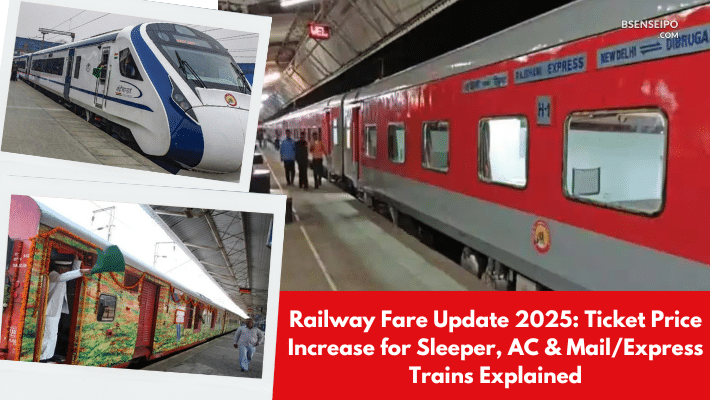
Railway Fare Update 2025: Indian Railways has implemented a new passenger fare structure effective from December 26, 2025, marking the second revision in 2025 as part of efforts to balance passenger affordability with the financial sustainability of railway operations. The revised structure involves marginal increases in ticket prices for long-distance travel across Multiple classes — including Sleeper, AC, and Mail/Express trains — while protecting suburban services and season ticket holders from any fare rise.
Why Were Railway Fares Increased?
The Railway Ministry stated that the fare revision — referred to as fare rationalisation rather than a direct hike — aims to:
- Balance operational costs with passenger affordability
- Improve the sustainability of railway finances
- Support future investment in network improvements, safety, and services
- Generate additional revenue without placing excessive burden on commuters
According to officials, the revision could generate around ₹600 crore in additional revenue for Indian Railways.
Overview of Fare Changes (Effective Dec 26, 2025)
General Principles
- The new fares apply only to tickets booked on or after December 26, 2025 — tickets booked earlier will Not be affected, even if travel takes place after the effective date.
- Suburban train services and season tickets (both suburban and non-suburban) remain unchanged.
- Reservation fees, superfast surcharges, GST, and ancillary charges also remain the same post-revision.
Ordinary Non-AC (Non-Suburban) Fares
For ordinary non-AC services — including Second Class Ordinary, Sleeper Class Ordinary, and First Class Ordinary — the fare revision introduces a tiered structure for journeys beyond 215 km:
| Distance Traveled (km) | Revised Fare Increase |
|---|---|
| Up to 215 km | No increase |
| 216–750 km | ₹5 increase |
| 751–1,250 km | ₹10 increase |
| 1,251–1,750 km | ₹15 increase |
| 1,751–2,250 km | ₹20 increase |
This graded approach ensures that short-distance and daily commuters are largely unaffected, while longer journeys see modest increases.
Sleeper Class & Mail/Express Trains
Sleeper Class Ordinary
For non-suburban Sleeper Class and First Class Ordinary travel, fares have been revised uniformly at 1 paise per kilometre. This applies to journeys beyond the 215 km threshold where the general fare structure is applicable.
Mail/Express Trains (Including AC Classes)
For Mail/Express trains, including both non-AC and AC classes, the basic fares have been increased by:
- 2 paise per kilometre for all applicable coaches, including:
- Sleeper Class
- First Class
- AC Chair Car
- AC 3-Tier
- AC 2-Tier
- AC First Class
For example, on a 500 km Mail/Express journey, passengers in non-AC coaches may pay about ₹10 extra compared to previous fares.
Premium & Special Trains Covered
The revised fare structure applies to most major passenger services, including but not limited to:
- Rajdhani, Shatabdi, Duronto
- Vande Bharat, Tejas Express
- Humsafar, Amrit Bharat, Garib Rath
- Jan Shatabdi, Yuva Express, Namo Bharat Rapid Rail
- Ordinary non-suburban train services
These services will reflect the class-wise fare increases in their basic ticket pricing.
What Has Not Changed in the Fare Revision?
To protect economically weaker sections and daily workers, the Ministry has kept several categories exempt from this hike:
-
Suburban (Local) Trains: No change in fares.
-
Monthly Season Tickets (MST): No change.
-
Ancillary Charges: Reservation fees, Superfast surcharges, and Catering charges remain the same.
Indian Railways emphasised that the following remain unaffected:
- Suburban train fares
- Season ticket prices
- Reservation charges
- Superfast surcharges
- GST and fare rounding rules
Passengers traveling short distances or commuting regularly by suburban services will notice no direct fare impact from this revision.
Passenger Impact: Who Pays More?
Short-Distance Travellers
- Journeys up to 215 km are mostly unaffected by price increases.
- Daily commuters relying on suburban and short-distance trains see no change in ticket fares or season ticket pricing.
Long-Distance Travellers
- Those traveling beyond 215 km in Sleeper, AC, or Mail/Express coaches will pay slightly higher fares, with hikes expressed in paise per kilometre.
- For frequent long-distance travelers, the cumulative cost difference over multiple trips may add up, but the increase is relatively modest compared to past fare adjustments.
Impact on Major Routes (Approximate Increase)
| Route | Distance | Est. Fare Increase |
| Delhi – Mumbai | ~1,400 km | ~₹28 |
| Delhi – Kolkata | ~1,440 km | ~₹29 |
| Delhi – Chennai | ~2,200 km | ~₹44 |
| Mumbai – Ahmedabad | ~500 km | ~₹10 |
Railway Finance and Future Outlook
The fare rationalisation is part of Indian Railways’ broader effort to modernise services while maintaining affordability for the majority of passengers. With rising operational costs — including staff, energy, and infrastructure maintenance — such calibrated fare revisions are aimed at ensuring the long-term financial sustainability of India’s vast railway network.
Analysts also note that railway-linked stocks have reacted positively to the update, with some gains reflecting investor confidence in improved revenue streams from passenger traffic.
Why the Hike?
According to the Railway Board, the total cost of operations for 2024–25 reached ₹2.63 lakh crore, with significant increases in manpower and pension costs. This marginal hike is expected to generate an additional ₹2,400 crore annually, which will be reinvested into safety technology (Kavach system) and station redevelopment under the Amrit Bharat scheme.
Conclusion
The Railway Fare Update 2025, effective from December 26, introduces nominal increases in ticket prices for Sleeper, AC, and Mail/Express trains. While short-distance commuters and suburban travelers are shielded from the hike, long-distance passengers will experience modest additional costs — often as little as a few rupees on typical journeys. The revised fare structure reflects a balanced approach by Indian Railways to enhance revenue without significant strain on ordinary passengers.